
Sewn or Glued: Choosing a Paperback Binding Route
Two softcover books can look identical on a shelf and behave very differently after a year. The decision follows from two variables: how thick the book is, and how often it will come back to press.
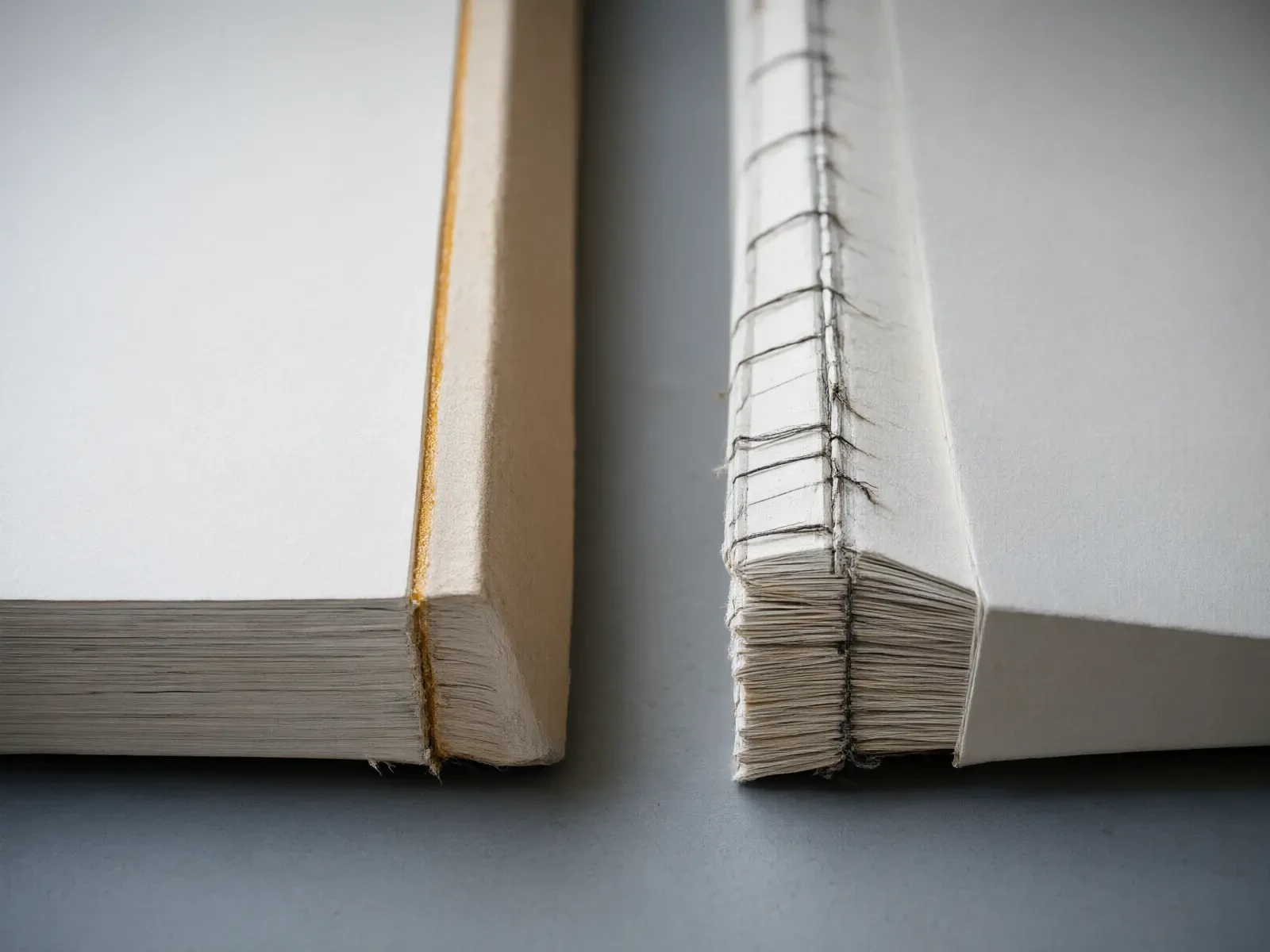
Two softcover books can look identical on a shelf and behave very differently after a year of use. The difference sits inside the spine, where one block is held by thread and the other by adhesive alone. For publishers planning a list, the choice between sewn softcover (often called Smyth sewn or section sewn) and perfect binding is rarely a matter of taste. It follows from two variables: how thick the book is, and how often the title will come back to press.
Two routes through the same spine
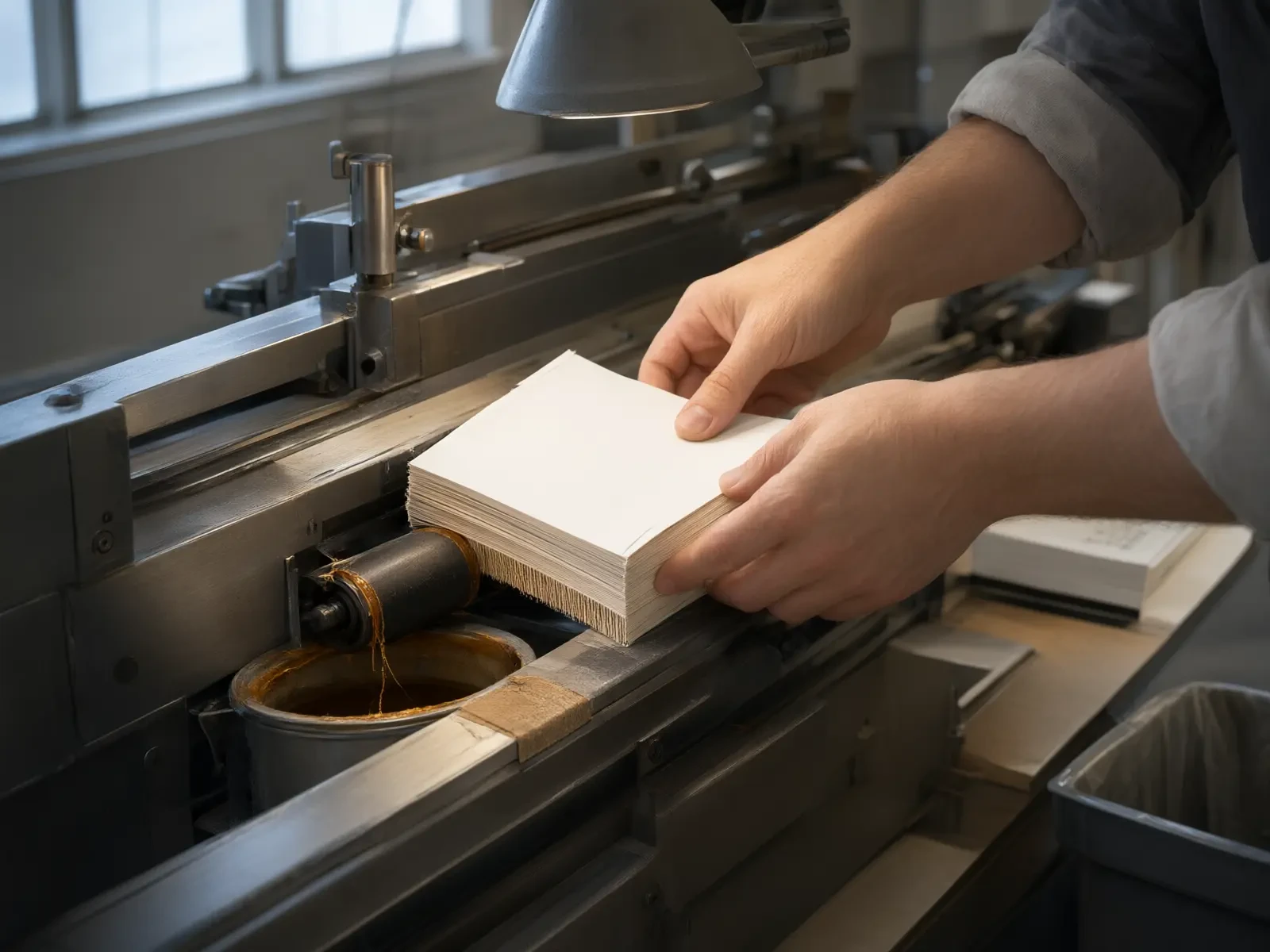
Perfect binding gathers single leaves, mills the spine edge to expose paper fibers, applies hot-melt adhesive, and wraps a cover around the block. EVA glue is the lower-cost option and accounts for most trade paperbacks; it becomes brittle under repeated heat and cold cycles. PUR (polyurethane reactive) adhesive costs more but bonds more aggressively to coated stock and holds heavier blocks together. In both cases the glue line is the only thing keeping a page in the book.
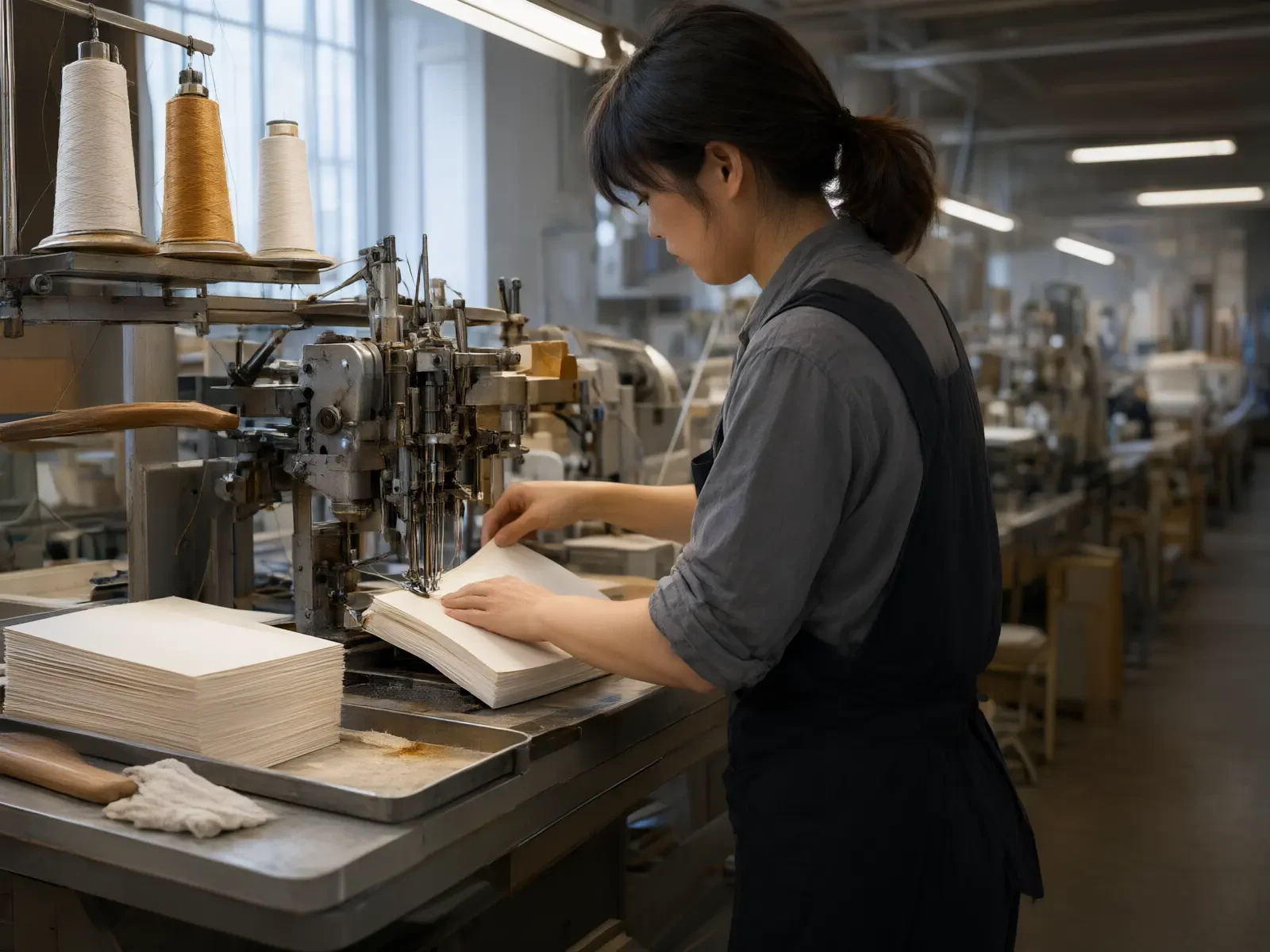
Sewn softcover folds printed sheets into signatures, usually 16 or 32 pages, sews thread through the fold of each signature, then glues the sewn block into a soft cover and trims three sides. The result still has a flat spine and still looks like a paperback. The difference is redundancy: glue attaches the block to the cover, while thread holds the pages to each other. If the adhesive ages, the text block stays intact.
Thickness sets the floor and the ceiling
Adhesive needs roughly 3 mm (0.125 in) of spine surface to bond reliably. On 50 lb offset stock at about 0.004 in per sheet, that works out to roughly 62 pages; on 80 lb offset it is closer to 42 pages. Below that threshold, a heavier paper stock or a different binding method such as saddle stitch or wire-o is the practical answer.
At the other end, most perfect-binding lines run to about 2 in of spine, with some equipment reaching 2.25 in. Past that point the weight of the block works against the glue line, the spine bows, and the book resists opening. Sewn softcover carries thick blocks better because the thread, not the adhesive, bears the load. Sewing also tolerates heavy coated and art papers, which give glue little fiber to grip and are a common cause of pages pulling loose in thick perfect-bound books.
Two layout consequences follow. Perfect binding needs roughly 2 to 3 mm more inner margin, since the block curves into the spine and swallows part of the gutter. Sewn blocks open flat, so a photograph or chart can cross the spread without disappearing into the curve. Spine text is available on both routes, but a spine narrower than about 6 mm (0.25 in) leaves too little room for legible type.
The reprint cycle changes the arithmetic
Binding decisions are usually argued on unit cost. A better measure is cost per year in market, which depends on how fast a title reprints and how long each copy survives.
A frontlist title with one or two large printings, sell-through measured in months, and a short shelf life fits perfect binding. The process is a single automated pass with no folding-and-sewing stage, so turnaround is shorter and capacity is easier to secure when a reprint is needed quickly. For commercial fiction, annual reports, catalogues, and seasonal titles, the glue line will outlast the commercial life of the book.
A backlist title that reprints over several years, or a book opened daily in a classroom, belongs in sewn softcover. Textbooks, manuals, cookbooks, and reference volumes flex the same spine hundreds of times; thread survives that cycle where EVA eventually cracks. The higher unit cost is paid once per copy, and it is offset by fewer replacements, fewer returns from retailers, and a block that still lies flat after years of use.
Between those poles, reprint frequency of roughly every 18 to 24 months with moderate extent is usually served by PUR perfect binding. Sewn is the better call when the book must lie flat for its function, or when the interior runs on heavy coated paper.
One production detail affects the comparison. Sewing adds a separate folding and sewing operation, so short runs carry a larger share of make-ready cost and the price gap is widest at low quantities. On long runs the gap narrows, and on titles that would need PUR anyway it narrows further. That is why a quotation should separate binding cost from paper and press cost rather than presenting one landed figure.
| Specification | Perfect binding | Sewn softcover |
|---|---|---|
| Workable spine | 3 mm to about 50 mm | 6 mm to 60 mm and beyond |
| Typical extent | 48 to 400 pages | 96 to 800 pages |
| Opening behavior | Curves at the gutter, wider inner margin | Lies flat, usable spreads |
| Paper tolerance | Uncoated and light coated; PUR for heavy coated | Heavy coated and art paper |
| Reprint profile | Fast frontlist, one or two printings | Backlist, repeated reprints |
| Unit cost | Lower | Higher, narrowing at volume |
| Typical titles | Trade fiction, reports, catalogues | Textbooks, manuals, cookbooks, art books |
What a production answer needs
A binding recommendation is only as good as the specification behind it. The useful inputs are trimmed size, extent, interior paper weight in gsm, calculated spine width, print quantity, expected reprint interval, whether the book must lie flat, and cover lamination. With those in hand, both routes can be quoted side by side instead of argued in the abstract.
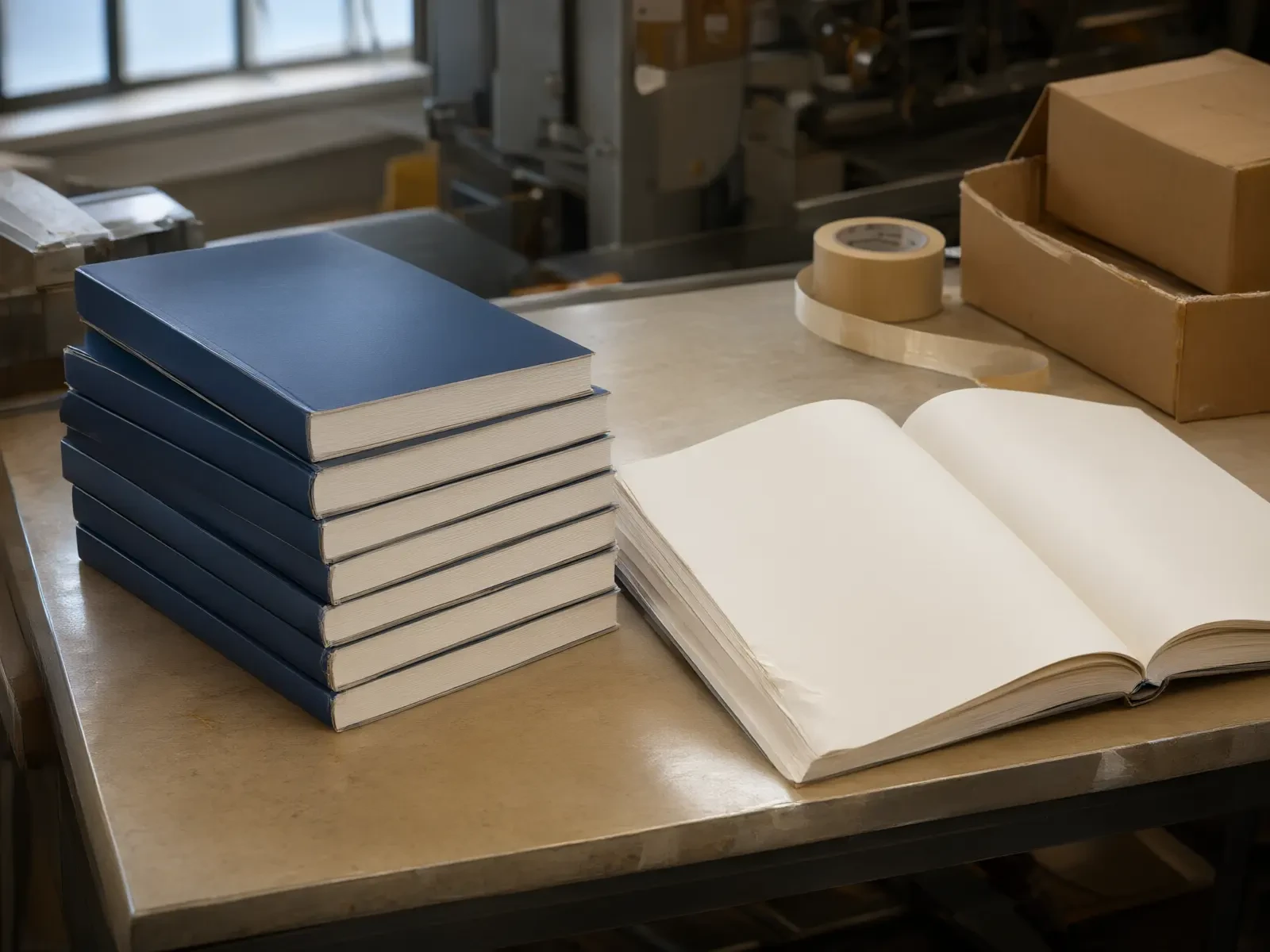
We produce soft cover book printing and paperback book printing at Wons Printing Company Limited, with perfect bound and Smyth sewn blocks finished on the same production floor. That arrangement makes the comparison a manufacturing question rather than a sales one, since the same estimator and the same binding line can be evaluated against the title's actual life. Publishers working through Book Printing Expert can send a specification to Tiger@paperbookprinting.com and receive a route recommendation with the cost difference stated openly.
References
Binding routes are quoted against the title's extent, paper and reprint plan. The specification notes above follow the published references below.
Related
Specifying a title?
Send the trim size, extent and paper choice. Binding route, spine width and cover finishing are confirmed before the run.